
标签:django data play 配置文件 display 成功 mod ble 需要
知识点:urls.py配置文件本质是URL与要为该URL调用的视图函数之间的映射表
from django.conf.urls import url
from django.contrib import admin
from app01 import views

urlpatterns = [
    url(r‘^user_list/‘, views.UserList.as_view()),
]
from django import views
# django基础必备三件套
from django.shortcuts import render, redirect

# 导入models模块,获取数据库中的数据
from app01 import models


# 用户展示
class UserList(views.View):
    # 根据用户发送请求的方法不同,做不同的操作
    def get(self, request):
        # 查询出所有用户数据
        data = models.User.objects.all()
        # 在页面上中展示, 将页面返回给用户
        return render(request, ‘user_list.html‘, {‘users‘: data})
配置settings.py文件
TEMPLATES = [
    {
        ‘BACKEND‘: ‘django.template.backends.django.DjangoTemplates‘,
        ‘DIRS‘: [‘templates‘],
创建user_list.html文件,在页面上展示用户信息
<!DOCTYPE html>
<html lang="en">
<head>
    <meta charset="UTF-8">
    <title>user_list</title>
</head>
<body>
    <table border="2">
        <thead>
            <th>序号</th>
            <th>用户名</th>
            <th>密码</th>
        </thead>
        <tbody>
            {% for user in users %}
                <tr>
                    <td>{{ user.id }}</td>
                    <td>{{ user.username }}</td>
                    <td>{{ user.password }}</td>
                </tr>
            {% endfor %}
        </tbody>
    </table>
</body>
</html>
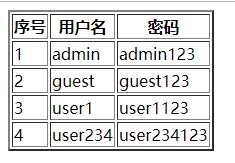
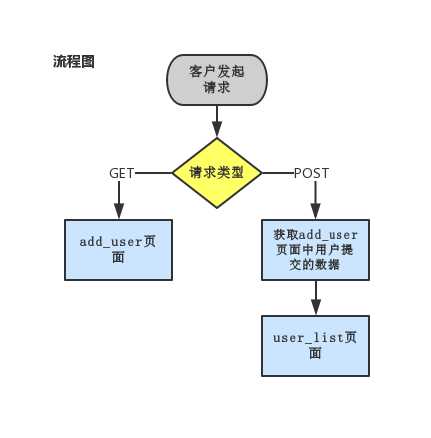
from django.conf.urls import url
from django.contrib import admin
from app01 import views

urlpatterns = [
    url(r‘^user_list/‘, views.UserList.as_view()),
    url(r‘^add_user/‘, views.AddUser.as_view()),
]
    <button>
        <a href="/add_user/" style="text-decoration: none">新增用户</a>
    </button>
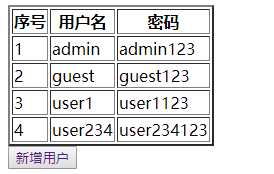
<!DOCTYPE html>
<html lang="en">
<head>
    <meta charset="UTF-8">
    <title>add_user</title>
</head>
<body>
<form action="" method="post">
    <input type="text" name="username" placeholder="用户名"><br>
    <input type="password" name="password" placeholder="密码"><br>
    <button>提交</button>
</form>
</body>
</html>
# 新增用户
class AddUser(views.View):
    # 根据用户发送请求的方法不同,做不同的操作
    def get(self, request):
        # 当用户请求为GET时,返回add_user.html页面
        return render(request, ‘add_user.html‘)

    def post(self, request):
        # 当用用户请求为POST时,获取用户在页面提交的数据
        username = request.POST.get(‘username‘)
        password = request.POST.get(‘password‘)
        # 在数据库创建,新的用户
        models.User.objects.create(username=username, password=password)
        # 跳转到用户信息展示页面
        return redirect(‘/user_list/‘)
from django.conf.urls import url
from django.contrib import admin
from app01 import views

urlpatterns = [
    url(r‘^user_list/‘, views.UserList.as_view()),
    url(r‘^add_user/‘, views.AddUser.as_view()),
    url(r‘^del_user/‘, views.DelUser.as_view()),
]
<!DOCTYPE html>
<html lang="en">
<head>
    <meta charset="UTF-8">
    <title>user_list</title>
</head>
<body>
    <table border="2">
        <thead>
            <th>序号</th>
            <th>用户名</th>
            <th>密码</th>
            <th>操作</th>
        </thead>
        <tbody>
            {% for user in users %}
                <tr>
                    <td>{{ user.id }}</td>
                    <td>{{ user.username }}</td>
                    <td>{{ user.password }}</td>
                    <td>
                        <a href="/del_user/?id={{ user.id }}">删除</a>
                    </td>
                </tr>
            {% endfor %}
        </tbody>
    </table>
    <button>
        <a href="/add_user/" style="text-decoration: none">新增用户</a>
    </button>
</body>
</html>
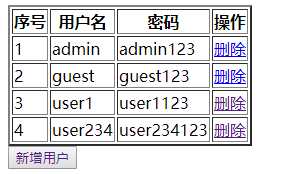
# 删除用户
class DelUser(views.View):
    # 根据用户发送请求的方法不同,做不同的操作
    def get(self, request):
        # 获取URL中提交的数据,获得id对应值
        del_id = request.GET.get(‘id‘)
        # 在数据库中通过id字段获取数据,并删除
        models.User.objects.filter(id=del_id)[0].delete()
        # 跳转到用户信息展示页面
        return redirect(‘/user_list/‘)
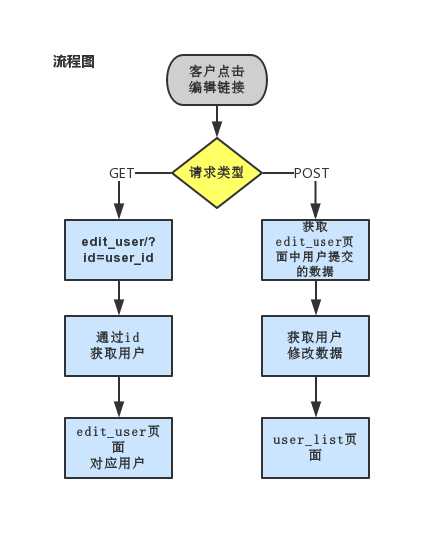
from django.conf.urls import url
from django.contrib import admin
from app01 import views

urlpatterns = [
    url(r‘^user_list/‘, views.UserList.as_view()),
    url(r‘^add_user/‘, views.AddUser.as_view()),
    url(r‘^del_user/‘, views.DelUser.as_view()),
    url(r‘^edit_user/‘, views.EditUser.as_view()),
]
<!DOCTYPE html>
<html lang="en">
<head>
    <meta charset="UTF-8">
    <title>user_list</title>
</head>
<body>
    <table border="2">
        <thead>
            <th>序号</th>
            <th>用户名</th>
            <th>密码</th>
            <th>操作</th>
        </thead>
        <tbody>
            {% for user in users %}
                <tr>
                    <td>{{ user.id }}</td>
                    <td>{{ user.username }}</td>
                    <td>{{ user.password }}</td>
                    <td>
                        <a href="/del_user/?id={{ user.id }}">删除</a>
                        <a href="/edit_user/?id={{ user.id }}">编辑</a>
                    </td>
                </tr>
            {% endfor %}
        </tbody>
    </table>
    <button>
        <a href="/add_user/" style="text-decoration: none">新增用户</a>
    </button>
</body>
</html>
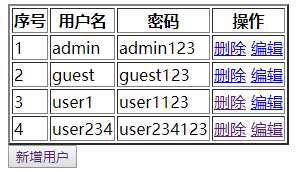
<!DOCTYPE html>
<html lang="en">
<head>
    <meta charset="UTF-8">
    <title>edit_user</title>
</head>
<body>
<form action="" method="post">
    <input type="text" name="username" placeholder="{{ user.username }}"><input name="edit_id" value="{{ user.id }}" style="display: none"></input><br>
    <input type="password" name="password" placeholder="密码"><br>
    <button>提交</button>
</form>
</body>
</html>
# 编辑用户
class EditUser(views.View):
    # 根据用户发送请求的方法不同,做不同的操作
    def get(self, request):
        # 获取URL中提交的数据,获得id对应值
        edit_id = request.GET.get(‘id‘)
        # 在数据库中通过id字段获取数据
        edit_user = models.User.objects.filter(id=edit_id)[0]
        # 在编辑用户页面返回用户
        return render(request, ‘edit_user.html‘, {‘user‘: edit_user})

    # 当用用户请求为POST时,获取用户在页面提交的数据
    def post(self, request):
        # 获取用户提交过来的数据,通过edit_id查找到需要修改的用户
        edit_id = request.POST.get(‘edit_id‘)
        edit_user = models.User.objects.filter(id=edit_id)[0]
        # 获取用户在页面提交的修改数据,并且在数据中修改
        edit_user.username = request.POST.get(‘username‘)
        edit_user.password = request.POST.get(‘password‘)
        # 将改动同步到数据库
        edit_user.save()
        # 编辑成功,跳转到用户展示页面
        return redirect(‘/user_list/‘)
04-在views.py中使用class编写django项目
标签:django data play 配置文件 display 成功 mod ble 需要
原文地址:https://www.cnblogs.com/gongniue/p/10838001.html
